Free inspections  ·  Flat written pricing  ·  Utah County
Mon–Fri 7am–6pm  ·  Saturday by appointment
Lehi · Utah County · Climate Zone 5B

Wall Insulation for Existing Homes in Lehi, Utah

Older Lehi homes often have nothing in the walls at all. You can fix that without opening them up.

Lehi Elite Insulation insulates the walls of existing homes across Lehi and Utah County with dense-pack drill-and-fill, and insulates new walls and additions to Utah's R-20 code level with batts or foam. We check which cavities are actually empty before quoting, so you only pay to fill what needs filling. Free inspection, flat written price.

  • ✓ No demolition. A small hole per stud bay, plugged and patched
  • ✓ Dense-packed so it cannot settle
  • ✓ Cavities checked first, so the quote covers only the empty ones

Get a free wall inspection

Takes about 30–45 minutes. No cost, no pressure.

We'll call you back to schedule. Your request goes only to the contractor who does the work. See our privacy policy.

Thanks, we'll call you back shortly.
Which homes

Which Lehi homes have empty walls

Wall insulation was not standard practice in Utah until the 1970s, and it was thin until the 1990s. The house's age tells us most of what to expect.

The older homes near Main Street and Center Street, the pioneer-era and mid-century houses in Lehi's original grid, and the first tracts built north of the freeway commonly have no wall insulation at all. Plaster or drywall, an empty stud cavity, sheathing, and siding. On a January morning you can feel it by putting a hand on an exterior wall.

Homes from the 1970s and 1980s usually have thin fiberglass batts, often R-11, sometimes poorly fitted with gaps at the top and around wiring. Those walls can be dense-packed too. The fill tube compresses the old batt and fills the remaining space.

Homes built from the 1990s on, including nearly everything on Traverse Mountain, in Holbrook Farms, and around Thanksgiving Point, were built with R-13 to R-21 batts and are rarely worth retrofitting. For those homes the money is better spent in the attic and at the rim joist.

How we check before we quote

We do not quote a whole house on the assumption that every wall is empty. During the inspection we check a bay or two: an outlet box on an exterior wall with the breaker off, a small inspection hole in a closet or behind a door, or the open cavities in an unfinished basement or garage that share a wall with the house. If some walls are insulated and some are not, the quote covers only the empty ones.
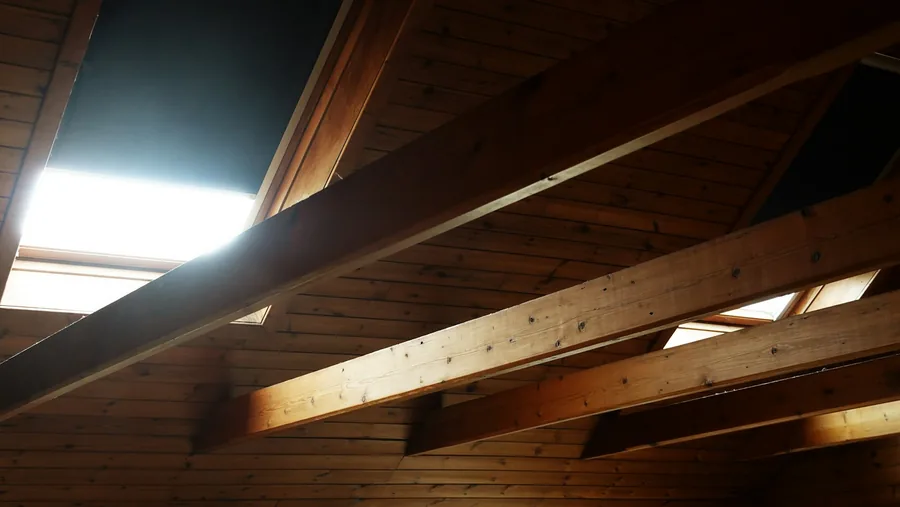
Open wall framing showing empty stud cavities before insulation
An open cavity in an unfinished area often tells us what the finished walls upstairs look like. Stock photo.
Methods

Drill-and-fill dense-pack vs. injection foam

Both fill a closed wall through a small hole. They differ in material, cost, and how they handle a cavity that already has something in it.

FactorDense-pack cellulose or fiberglassInjection foam
How it goes inBlown through a fill tube at high density until the cavity is packedTwo-part foam injected as a liquid that expands to fill the cavity
R-value per inch (typical)About R-3.5 to R-3.8 (cellulose), R-2.5 to R-3 (fiberglass)About R-4 to R-5
R-value in a 2x4 wallAbout R-12 to R-13About R-14 to R-16
Existing batts in the cavityFills around and compresses themStruggles to flow around obstructions
Air sealingGood. Dense-pack slows air movement noticeably.Better. Foam seals the cavity.
CostLowerHigher
Best fitMost older Lehi homes, including walls with old thin battsCompletely empty cavities where the extra R-value and air seal justify the cost

R-values are typical manufacturer-rated ranges and depend on installed density and cavity depth.

Patching, and new walls

Inside or outside, and what happens to the holes

Every drill-and-fill job leaves one hole per stud bay, about two inches across, near the top of the wall. Where we drill depends on your siding.

Lap siding and some vinyl profiles can be loosened, drilled behind, and reset so the holes are invisible. Brick and stucco are drilled from inside. A drywall plug and a skim patch are easier to make disappear than a patch in masonry, and the room needs paint at the patch line afterward. Which approach fits your house is settled during the inspection and the patching is in the quote, not an extra.

New walls and additions

Open framing is a different job. Additions, garage conversions, and new construction get batts or spray foam to the code path in the box on the left, R-20 in the cavity or R-13 plus R-5 continuous. High-density fiberglass or mineral wool batts fitted without compression, or closed-cell foam where the wall meets concrete or needs a vapor retarder. Rooms over garages get closed-cell foam in the floor cavity, which is the fix for the cold-room problem those additions are known for.

Rebates. ThermWise pays $0.30 per square foot on wall insulation added in increments of R-11 or more for Enbridge Gas customers, through a ThermWise authorized contractor. Wattsmart pays more but only for Rocky Mountain Power customers, which excludes most of Lehi. Full rules in the rebates guide.
How it works

The drill-and-fill job, start to finish

01

Free inspection

We confirm which walls are empty, check for knob-and-tube wiring or moisture, and decide inside or outside drilling. About 30–45 minutes.

02

Written scope and price

Which walls, which material, how the holes get patched, and any rebate you qualify for. Flat, in writing.

03

Fill

One hole per bay, fill tube to the bottom, packed to density on the way up. Each bay checked for blockages such as fire blocking, which get a second hole.

04

Patch and walkthrough

Holes plugged and patched, siding reset, photos of the work, and the documentation a rebate application asks for.

Common questions

Wall insulation in Lehi, UT: FAQs

Can you insulate walls without removing drywall?

Yes. Drill-and-fill works through a hole about two inches wide at the top of each stud bay, either from inside through the drywall or from outside through the siding. Dense-pack cellulose or fiberglass is blown in through a fill tube until the cavity is packed, then the hole is plugged and patched. No demolition.

Drill from inside or outside?

It depends on your siding. Lap siding and some vinyl can be lifted or removed and put back so the holes are hidden. Brick and stucco are usually drilled from inside, where a drywall patch is easier and cheaper to make disappear than a patch in masonry. We tell you which during the inspection and the patching is in the quote.

Will it settle?

Dense-pack is installed at a density high enough that it cannot settle, roughly 3.5 pounds per cubic foot for cellulose. That is the whole point of the technique. Loose-fill blown at attic density would settle in a wall, which is why walls are dense-packed and attics are not.

How do I know my walls are empty?

Homes built before about 1970 often have nothing in the walls. The quick check is to turn off the breaker, remove an outlet cover on an exterior wall, and look or probe beside the box. During the inspection we check a bay or two and, if you have one, use a small inspection hole in a closet to confirm before quoting.

Does wall insulation qualify for rebates?

For Enbridge Gas customers, ThermWise pays $0.30 per square foot on wall insulation added in increments of R-11 or more, through a ThermWise authorized contractor. Rocky Mountain Power's Wattsmart pays $0.65 per square foot in electrically heated homes and $0.25 in electrically cooled homes, but only for RMP customers, only on exterior walls with no existing insulation, and not for homes built in the last 10 years. Most of Lehi is on Lehi City Power, so Wattsmart does not apply there.

Related

Other work that often goes with this

Free inspection

Find out what is inside your walls

We check a bay or two, tell you which walls are empty, and quote only those. In writing, flat priced.

Call (801) 348-3113

Request a callback

Mon–Fri 7am–6pm. We'll call you back to schedule.

Thanks, we'll call you back shortly.
Call (801) 348-3113 for a Free Inspection